Urban Centers Grapple with Hazardous Air
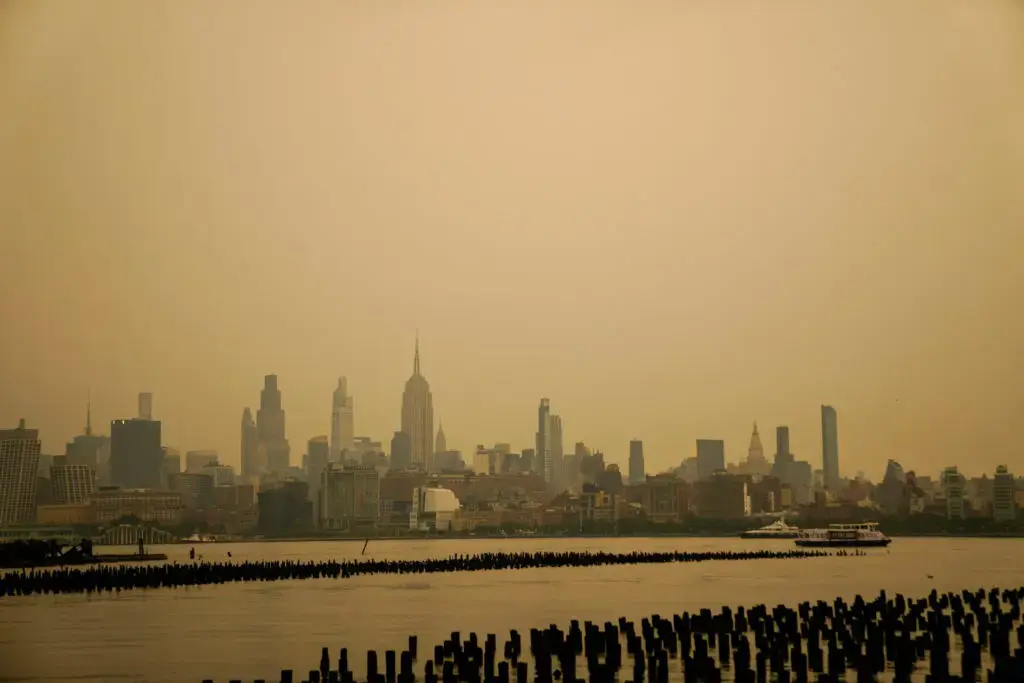
A massive blaze in the western United States has sent a thick plume of smoke across the Midwest and Mid‑Atlantic. By mid‑July 2026, more than 115 million people—roughly a third of the nation’s population—are breathing air that exceeds safe pollution thresholds. Public health officials warn of immediate and long‑term health consequences.
Breaking news
 Greenpeace Investigates Zaporizhzhia Nuclear Plant Power Lines
 Researcher warns strict age limits needed for children on social media
 Hezbollah defends its arsenal amid Lebanese political deadlock
 Can an AI Chatbot Reduce Maternal Deaths in Kenya?
The smoke originates from a series of forest fires that ignited after an extended drought and record‑high temperatures. Winds have carried fine particulate matter (PM2.5) thousands of miles, raising the Air Quality Index (AQI) into the „unhealthy” and „very unhealthy” ranges in major cities such as Chicago, Detroit, and Philadelphia. Elevated PM2.5 levels can irritate lungs, trigger asthma attacks, and increase cardiovascular strain. Researchers attribute the spread to climate‑driven fire intensity and shifting wind patterns, which together create a perfect storm for cross‑regional pollution.
In Chicago, the AQI hovered above 150 for ten consecutive days, prompting the city’s health department to issue an emergency advisory. „We are seeing a surge in emergency room visits for respiratory distress,” reported Dr. Maria Lopez, an epidemiologist with the CDC. Similar trends emerged in Detroit, where schools delayed outdoor activities, and in Philadelphia, where hospitals reported a 22 % rise in asthma‑related admissions. The particulate load is especially dangerous for seniors, children, and people with pre‑existing heart or lung conditions.
Will Air Quality Recover Before the Summer Ends?
Experts remain cautious about a rapid improvement. While cooler temperatures later this month could dampen fire activity, the sheer volume of smoke already deposited in the atmosphere may linger. „Even if the fires are contained, the particles can remain aloft for weeks,” explained Dr. Alan Chen, a climate scientist at the University of Michigan. Authorities recommend using air purifiers, limiting outdoor exertion, and wearing N95 masks when AQI readings stay high. Federal agencies are monitoring the situation closely, preparing to deploy additional resources if health impacts worsen.
The lingering haze threatens to strain healthcare systems already coping with seasonal flu and COVID‑19 cases. Prolonged exposure could exacerbate chronic diseases, increase mortality rates, and deepen socioeconomic disparities as vulnerable communities lack access to mitigation tools. Continued monitoring and public education will be essential to protect public health as the smoke plume drifts onward.
Frequently Asked Questions
How can I protect myself from wildfire smoke? Stay indoors with windows closed, use HEPA filters if possible, and wear N95 respirators when venturing outside during high AQI periods.
Is the smoke dangerous for children? Yes, children’s developing lungs are particularly susceptible to irritation and inflammation, making them more likely to experience asthma attacks and other respiratory issues.
When is the smoke expected to clear? Forecasts suggest the worst concentrations may subside by late August, but lingering particles could keep AQI elevated for several more weeks, depending on weather patterns.