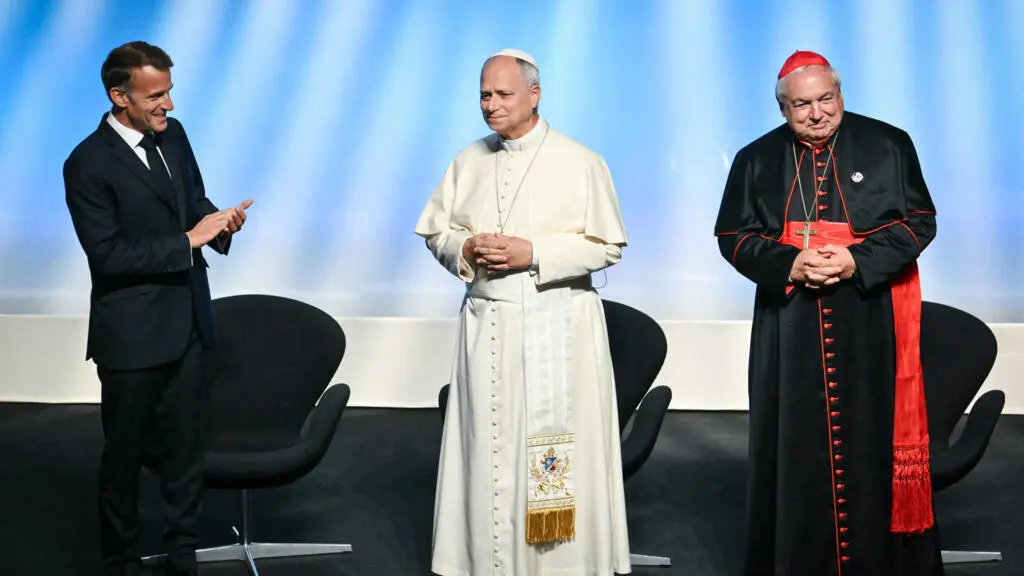
A Symbolic Setting for a Shared Vision
French President Emmanuel Macron and Pope Leo XIV met in Metz on September 28, 2026 to urge peace and deeper integration across Europe. The gathering took place in the historic city near the German border, drawing officials, religious leaders, and local citizens. Both speakers emphasized solidarity as the continent faces security challenges and economic strain.
Breaking news
 Former German Intelligence Chief Faces Espionage Charges
 American Educator Analyzes French Student Demonstrations
 Massive Protests Erupt Across France Over Educational Funding Shortfalls
 French students and teachers protest inadequate school resources
The event was staged in Metz’s central square, where Macron highlighted the European Union’s founding values of cooperation and mutual respect. He warned that fragmentation would weaken collective security and market stability. Pope Leo, addressing a crowd of several thousand, invoked Christian teachings on brotherhood and called for a „new era of unity” that transcends borders. Their joint message aimed to reinforce the EU’s cohesion ahead of upcoming parliamentary elections.
Metz, once a contested frontier between France and Germany, was chosen for its symbolic weight. The city’s cathedral, rebuilt after World War II, served as the backdrop for the Pope’s remarks. He cited the cathedral’s stained‑glass windows as a metaphor for a Europe where diverse cultures shine together. „We must build bridges, not walls,” he said, urging leaders to prioritize dialogue over division. Macron echoed this sentiment, noting recent spikes in nationalist rhetoric across member states. He announced a new funding initiative to support cross‑border infrastructure projects, aiming to boost trade and mobility in the region.
Can Religious Leadership Influence Secular Policy?
The audience responded with applause, and several local mayors pledged to host similar dialogues in their municipalities. Analysts see the Metz meeting as a strategic effort to counter rising Euroscepticism, especially in Eastern Europe where public trust in EU institutions has waned. By aligning political and religious authority, the French government hopes to tap into moral authority to reinforce its political message.
Pope Leo’s involvement raises questions about the role of religious voices in secular governance. While France maintains a strict separation of church and state, the Pope’s moral appeal resonates with many citizens who view faith as a guide for civic responsibility. Critics argue that such collaborations risk blurring lines between church and policy, but supporters claim that moral leadership can inspire collective action on issues like climate change and migration. The Pope’s call for „shared stewardship of our common home” aligns with EU climate goals, suggesting potential synergy between religious advocacy and legislative agendas.
The joint declaration concluded with a commitment to hold annual forums in border towns, fostering continuous dialogue. Observers predict that this initiative could strengthen regional ties and provide a platform for addressing contentious topics such as defense spending and refugee integration. If successful, the Metz model may be replicated across the continent, reinforcing a narrative of unity amid rising geopolitical tensions.
Frequently Asked Questions
Why was Metz selected for the event? Metz lies on the Franco‑German border, symbolizing historic reconciliation and offering a neutral ground for a message of European solidarity.
What concrete steps did Macron announce? He unveiled a €150 million fund for cross‑border transport and digital infrastructure, aimed at improving connectivity between neighboring EU regions.
How might the Pope’s remarks affect EU policy? While the Pope cannot legislate, his moral appeal could pressure lawmakers to prioritize social cohesion, climate action, and humanitarian aid in upcoming debates.
