In a desperate attempt
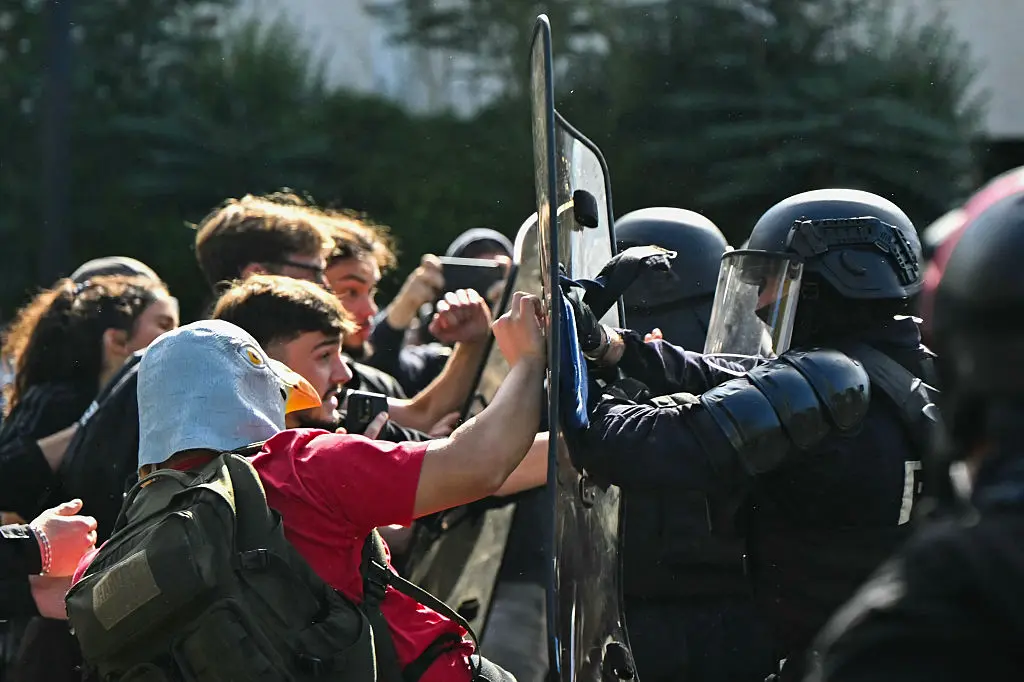
The disorder that has engulfed France’s secondary education has reached unprecedented levels. Schools across the country have shut down, creating a social tension that spreads rapidly nationwide. In recent days, complaints about poor conditions have turned into violent clashes, leading to the arrest of thousands of teenagers and the injury of hundreds of people. This situation illustrates the depth of the current educational crisis.
Breaking news
 South Korea Weighs Strong Response After DMZ Landmine Blast
 Quebec Separatists Promise Referendum After Election Victory
 Pacific Leaders Demand Firm Commitment to Fossil Fuel Exit
 Green Party Faces Crisis After Controversial Vote
French authorities report alarming figures on the protest movement. According to the Ministry of the Interior, about 3,000 people were detained since the demonstrations began almost two weeks ago outside Paris. Arrests peaked on Thursday, when nearly 2,000 individuals were taken into custody in a single day. The physical impact of the confrontations is equally significant. Education Minister Édouard Geffray confirmed that 170 students and 65 teaching staff members were injured during the incidents. Around 400 police officers were also victims of violence, underscoring the intensity of clashes between students and riot police.
Signs of easing tension did not appear even on Friday, when police recorded about 900 separate demonstrations across France. More than 500 schools remained closed, while students staged blockades, set fires, and directly confronted specialized police units. The scene repeated itself nationwide.
In a desperate attempt to calm the unrest through constructive dialogue, Minister Geffray met on Friday morning with education union representatives, student groups, and parent associations. On the social network X, he emphasized the need to listen to high‑school students’ voices. He said their difficulties demand concrete answers, implemented locally and nationally. He announced a new digital platform where students can submit proposals for reform, which will be reviewed and included in a comprehensive national report.
However, student representatives remained firm, calling for continued demonstrations after the meeting. Their main argument is the lack of tangible measures from the French government to address the complaints. This resistance signals fragile trust in authorities’ ability to solve structural problems.
A student described the dramatic situation
The motivations behind the student revolt are multiple and complex. A key grievance, repeatedly mentioned by demonstrators, is the acute shortage of teachers and support staff. Ministry of Education data show that in the 2024‑2025 school year, nearly 10% of scheduled lessons in public secondary schools were left unfilled. About 7.5% of those missed lessons were due to an inability to find temporary replacements, a chronic issue that halts learning.
A student described the dramatic situation: „The school is paralyzed because of a lack of resources, the absence of teachers, and an insufficient number of desks.” He added that nurses and supervisors are missing, and the only positive action seems to be confiscating students’ mobile phones. These statements paint a picture of administrative and material chaos inside school buildings.
Other protesters echoed similar complaints about degraded infrastructure and inadequate funding. A 15‑year‑old from Pantin, a Paris suburb, explained that his class of 35 students lacks sufficient furniture. He witnessed the protests while police used tear gas to disperse crowds. A 17‑year‑old from Strasbourg told AFP that his classroom holds 35 classmates, and during summer the interior temperature reaches 35 °C (95 °F), making the environment uncomfortable. He mentioned that toilets are insufficient, some rooms leak water, the building is literally crumbling, the cafeteria is too small, the budget is nonexistent, and resources are minimal, as are supervisors.
A 19‑year‑old student told The Guardian that protests also target heat‑wave conditions. He stressed the youth’s desire to study in decent conditions and criticized the French state for being surprised by poor school results while taking no action to fix the causes. Europe faced lethal heat waves this summer, with the west experiencing its hottest summer on record. In France, almost 8,000 people died from extreme temperatures, a tragic toll that highlighted the vulnerability of school infrastructure.
Another major source of frustration for students is the online university application system, Parcoursup, which they find cumbersome and unfair.