Why the videos sparked concern
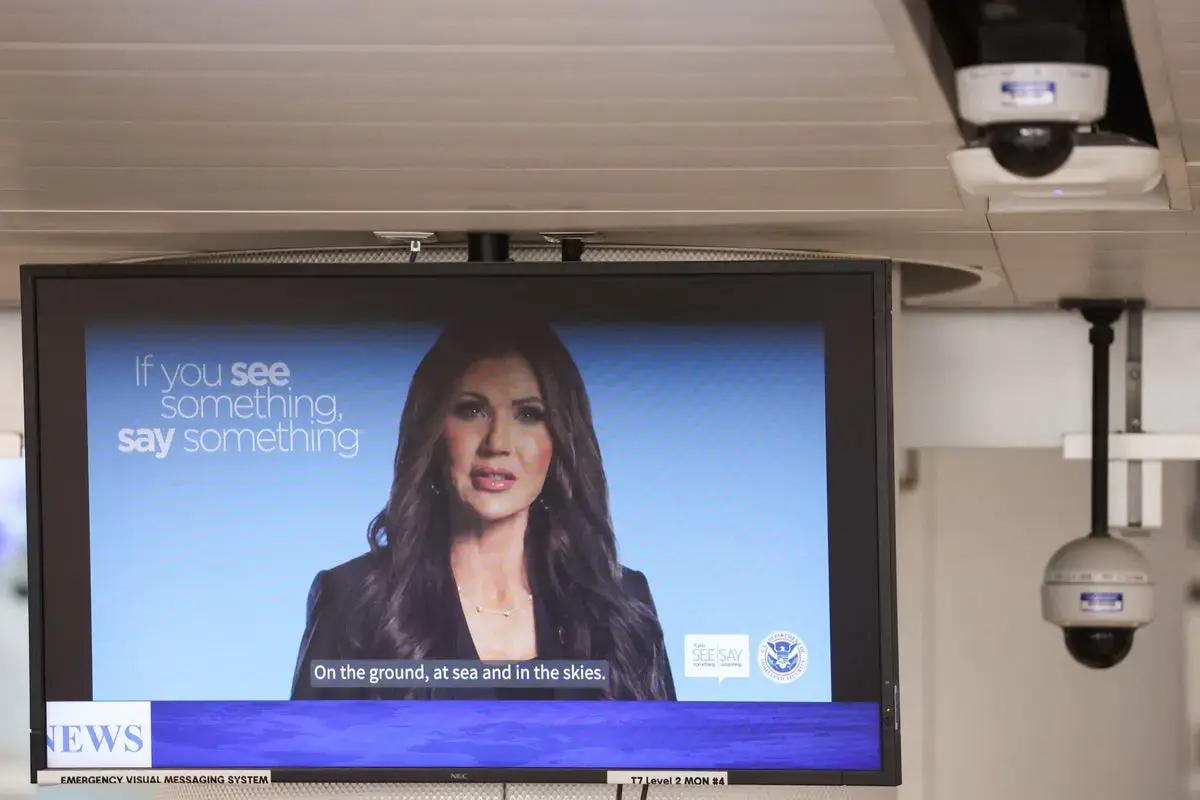
The Department of Homeland Security instructed Customs and Border Protection officials on Tuesday to locate and delete any airport videos that feature former South Dakota governor Kristi Noem. The directive came from Secretary Markwayne Mullin’s office after an internal review flagged the content as potentially politicized. Agencies were given 48 hours to confirm removal and report compliance.
Breaking news
 Greenpeace Investigates Zaporizhzhia Nuclear Plant Power Lines
 Researcher warns strict age limits needed for children on social media
 Hezbollah defends its arsenal amid Lebanese political deadlock
 Can an AI Chatbot Reduce Maternal Deaths in Kenya?
The request follows a broader DHS effort to keep public‑facing media at ports of entry free of partisan messaging. Officials said the videos, originally displayed at several major hubs, were part of a travel‑promotion campaign that referenced Noem’s recent endorsement of a federal infrastructure initiative. DHS argues that continued playback could be seen as government endorsement of a political figure, violating policy that requires neutrality in federally controlled spaces. CBP officers are now auditing digital signage inventories and coordinating with airport authorities to ensure swift compliance.
Critics argued that featuring Noem, who had recently been removed from a federal advisory board, blurred the line between public service and political advocacy. The videos highlighted her role in promoting tourism, yet her removal from the advisory panel raised questions about the appropriateness of her continued visibility in official venues. DHS officials emphasized that the agency must avoid any appearance of favoritism, especially when the subject is a recently ousted official. „Our mission is to protect the nation, not to promote individual political careers,” a senior DHS spokesperson said.
Will the removal set a precedent for political content?
The move may signal a stricter approach to political content across all DHS‑managed locations. Observers note that similar actions have been taken in the past when media featured elected officials in a manner deemed partisan. If CBP follows through, airports could see a broader sweep of content, removing not only videos of Noem but also any material that could be interpreted as endorsing a political figure. This could lead to tighter guidelines for future public‑information campaigns and more rigorous vetting processes before media is displayed at ports of entry.
The removal is expected to be completed within the next two days, with CBP submitting a compliance report to the Secretary’s office. Agencies will monitor the situation to gauge whether further actions are needed to maintain political neutrality. The decision underscores DHS’s commitment to keeping federal spaces free from perceived political influence, a stance that may shape how government‑funded media is produced and displayed in the future.
Frequently Asked Questions
What prompted the DHS order? A routine audit identified that videos featuring Kristi Noem remained on airport screens after she was removed from a federal advisory role, raising concerns about political endorsement.
How will CBP verify removal? Customs officers will conduct a digital inventory of all signage systems at major ports, confirm deletion of the flagged content, and submit a compliance report to DHS.
Could other political figures be affected? Yes, the policy applies to any content that could be seen as endorsing a political individual, so future media will undergo stricter review before deployment.