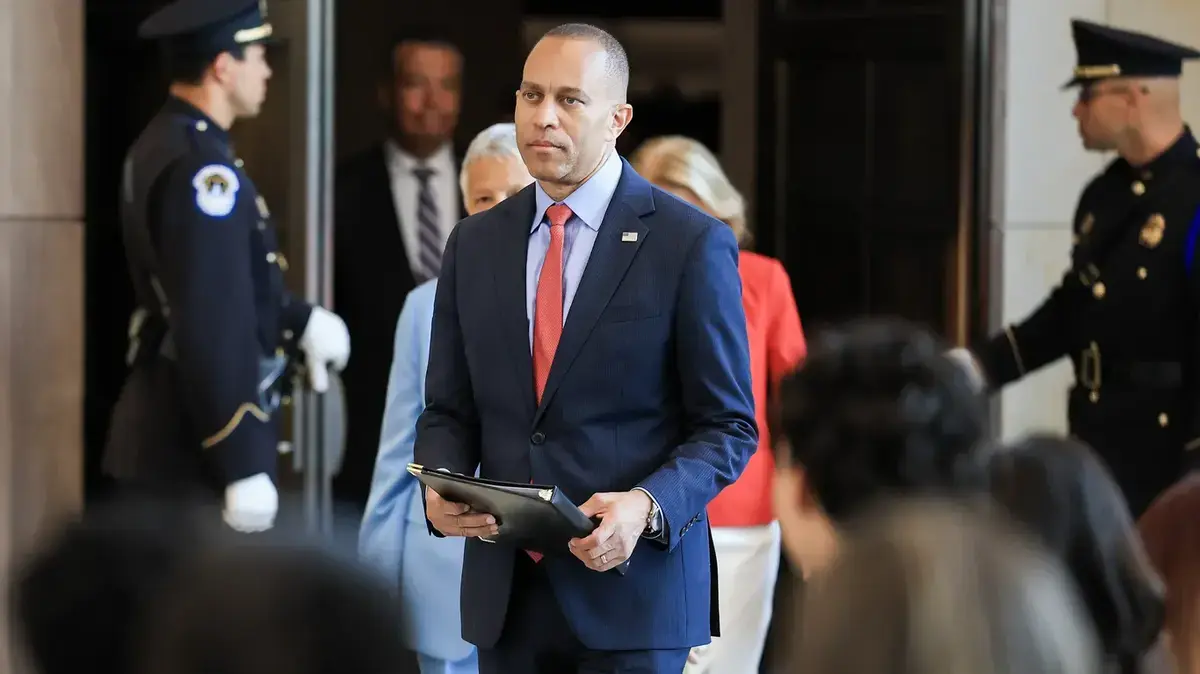
A Challenge to Party Unity
A growing number of Democratic House candidates are declining to endorse Minority Leader Hakeem Jeffries for Speaker. This trend, emerging from summer primaries, could complicate his path to leadership. These new members might create significant challenges for Jeffries as he tries to unify the party.
Breaking news
 Greenpeace Investigates Zaporizhzhia Nuclear Plant Power Lines
 Researcher warns strict age limits needed for children on social media
 Hezbollah defends its arsenal amid Lebanese political deadlock
 Can an AI Chatbot Reduce Maternal Deaths in Kenya?
This developing skepticism among incoming Democrats is particularly noteworthy. It signals potential internal divisions within the party. Such dissent could weaken the Democratic front against future political challenges.
The primaries are bringing forward candidates who are not committing to Jeffries. This group of uncommitted members is expanding. Their reluctance could undermine Jeffries' authority. It also raises questions about his ability to rally the caucus.
What Does This Mean for the Democratic Party's Future?
Forming a united front is crucial for any party leader. Jeffries needs strong support to effectively counter any opposing administration. A fractured caucus could hinder legislative efforts. It might also impact the party's public image.
The emergence of this skeptical bloc could force Jeffries to re-evaluate his strategy. He might need to work harder to secure support from all factions. This situation highlights the internal dynamics at play within the Democratic Party. The outcome of these internal struggles could shape the party's direction for years.
The ability to unite diverse voices is a key aspect of effective leadership. Jeffries faces a critical test in bringing these new members into the fold. Their decisions will ultimately impact the strength and cohesion of the Democratic caucus.
Frequently Asked Questions
What is the main issue facing Hakeem Jeffries? The main issue is a growing number of incoming Democratic House members who are not committing to vote for him as Speaker. This skepticism could undermine his leadership bid and party unity.
Why is this important for the Democratic Party? This situation is important because it indicates potential internal divisions that could weaken the party's ability to act cohesively. A lack of unity could hinder legislative efforts and the party's overall effectiveness.
What could be the long-term impact of these uncommitted members? The long-term impact could be a more challenging path for Jeffries to consolidate power and lead the party effectively. It might also lead to ongoing internal debates about the party's direction and leadership.