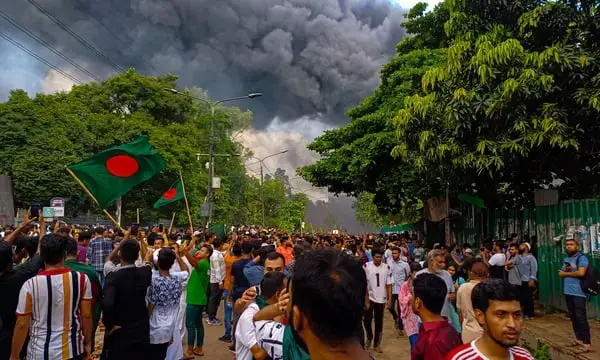
Redefining the Rules of Politics
Nepal, Sri Lanka, and Bangladesh have been hit by widespread protests, forcing governments to rethink their strategies. The unrest has led to significant changes in the region's politics. Protests erupted in all three countries, sparking a chain reaction.
Breaking news
 Greenpeace Investigates Zaporizhzhia Nuclear Plant Power Lines
 Researcher warns strict age limits needed for children on social media
 Hezbollah defends its arsenal amid Lebanese political deadlock
 Can an AI Chatbot Reduce Maternal Deaths in Kenya?
The protests were sparked by economic hardship, corruption, and government policies. In Nepal and Sri Lanka, the governments responded by changing the rules of the game, introducing reforms to address the protesters' concerns. In contrast, Bangladesh took a harder line, cracking down on opposition forces.
In Nepal, the government introduced constitutional changes to address the protesters' demands. Sri Lanka also implemented significant reforms, including changes to its economic policies. These moves have helped to ease tensions in both countries. The changes have been seen as a major shift in the region's politics.
Can Democracy Survive the Turmoil?
The protests in Bangladesh, however, were met with a heavy-handed response. The government removed opposition leaders from the field, claiming victory. This approach has raised concerns about the country's democratic future. Critics argue that the government's actions will only fuel further unrest.
The different responses to the protests raise questions about the future of democracy in the region. Will the reforms in Nepal and Sri Lanka be enough to stabilize the situation, or will Bangladesh's approach become the model for other governments? The region's politics are likely to remain volatile.
The consequences of these events will be far-reaching. The region's governments will need to balance the demands of their citizens with the need for stability. The outcome will have significant implications for the future of democracy in South Asia.
Frequently Asked Questions
What sparked the protests in South Asia? The protests were triggered by economic hardship, corruption, and government policies. Citizens demanded change and greater accountability.
How did Nepal and Sri Lanka respond to the protests? Both countries introduced significant reforms, including constitutional changes and economic policy shifts, to address the protesters' concerns.
Will Bangladesh's approach lead to further unrest? Critics argue that the government's heavy-handed response will only fuel further protests and destabilize the country.