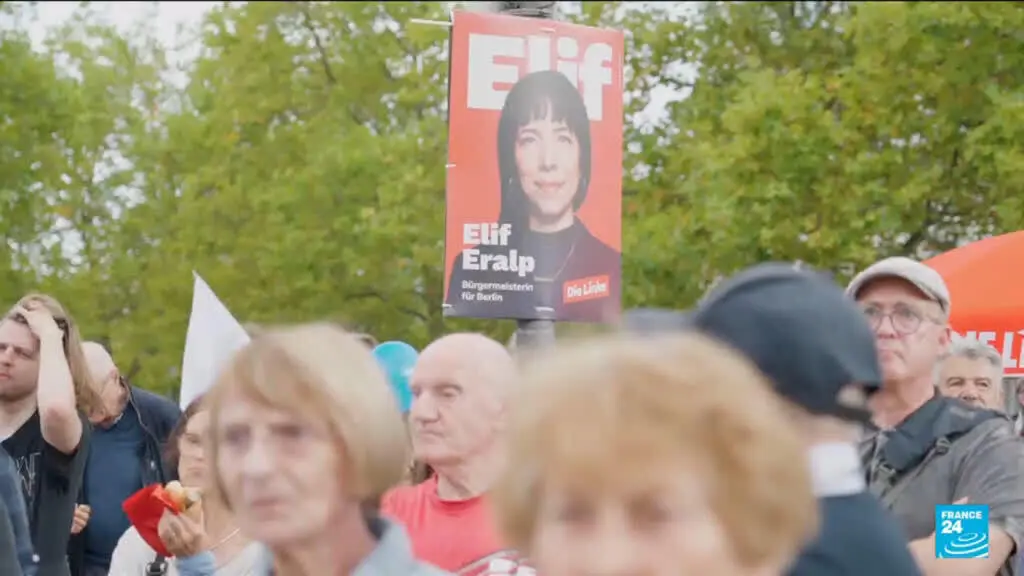
A Potential Political Milestone
The local political landscape is increasingly tense as the election nears. If Elif Eralp secures a victory, she will become the first member of the Left Party to serve as mayor of Berlin. This achievement would hold immense symbolic weight, signaling a major shift in the city’s governance after years of dominance by other political factions. A detailed report on this electoral dynamic was produced by Anne Mailliet, Paul-Louis Godard, and Leyla Sobler, who documented the candidate's rise.
Breaking news
 Trump Rejects AI Safety Measures Amid China Competition
 Behavioral Health and the Justice System: Accreditation and Continuity-of-Care Standards for Justice-Involved Individuals
 Britney Spears Dazzles in Bold Lingerie Shoot
 South Korea Weighs Strong Response After DMZ Landmine Blast
A Shifting German Landscape
The electoral environment in Germany is undergoing profound transformations. As of September 21, 2026, the Christian Democratic Union (CDU) is navigating a difficult period following a crushing defeat in regional elections. This decline contrasts sharply with the alarming rise of the far-right AfD party. According to a survey published on September 7, 2026, the AfD achieved significant success in the state of Saxony-Anhalt.
Analysts describe these results as a major blow to traditional parties. This trend reflects a broader European movement characterized by a right-wing populist wave. Germany also faces external pressures, including plans to hold Russia accountable for a recent drone incident at an airport.
Economic and Military Challenges
The German economy remains under significant strain. Data from May 2026 suggests that a new increase in tariffs could cost the nation $18 billion. Simultaneously, the Pentagon has announced the withdrawal of 5,000 troops from Germany. This decision has sparked intense discussions between NATO and the United States regarding the reduction of American military presence. In response, Berlin has called for a more robust European defense strategy. These complex geopolitical and economic factors form the backdrop for Elif Eralp’s campaign, creating an uncertain yet fascinating future for the German capital.
