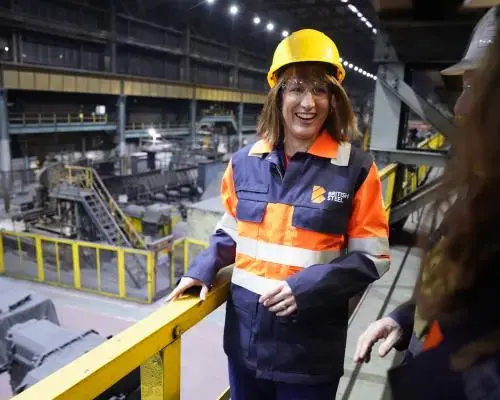
' Buy British' Campaign Gains Momentum
Chancellor Rachel Reeves has issued a stark warning to ministers, instructing them to prioritize British companies in four critical industries: shipbuilding, steel production, renewable energy, and artificial intelligence. This move comes as a response to concerns that government contracts have been awarded to foreign companies in recent years.
Breaking news
 Greenpeace Investigates Zaporizhzhia Nuclear Plant Power Lines
 Researcher warns strict age limits needed for children on social media
 Hezbollah defends its arsenal amid Lebanese political deadlock
 Can an AI Chatbot Reduce Maternal Deaths in Kenya?
In a letter seen by The Guardian, Reeves makes it clear that she is frustrated with the current state of affairs, where British businesses are being overlooked in favor of international competitors. She has specifically instructed cabinet ministers in charge of spending departments to ensure that government contracts are awarded to British companies in these key industries.
The chancellor's move is part of a broader effort to boost British industry and create jobs. Reeves believes that by supporting British companies, the government can stimulate economic growth and reduce reliance on foreign suppliers. She has also emphasized the importance of investing in British innovation and technology, particularly in the fields of artificial intelligence and renewable energy.
As part of this initiative, Reeves has asked ministers to identify areas where British companies can be given preference for government contracts. This could include shipbuilding, where British companies have a long history of excellence, as well as renewable energy, where Britain has set ambitious targets to reduce carbon emissions. In steel production, Reeves hopes that British companies will be able to compete with international rivals and supply the government with high-quality steel for infrastructure projects.
Can ' Buy British' Strategy Succeed?
But can the 'buy British' strategy succeed in the face of intense global competition? Critics argue that it may be difficult to enforce and could lead to higher costs for taxpayers. Others point out that Britain's industrial base has been eroded over the years, making it challenging for British companies to compete with international rivals.
However, Reeves remains optimistic about the potential for British industry to thrive. She believes that by investing in innovation and technology, British companies can develop the skills and expertise needed to compete with the best in the world.
The consequences of Reeves' 'buy British' strategy will be closely watched in the coming months. If successful, it could lead to a surge in investment in British industry and create thousands of new jobs. However, if it fails, it could lead to higher costs for taxpayers and further erosion of Britain's industrial base. One thing is certain: the debate over the role of government in supporting British industry is set to continue.
Consequences and Outlook
Frequently Asked Questions
Q: What are the four key industries that the chancellor has identified for the 'buy British' strategy? A: Shipbuilding, steel production, renewable energy, and artificial intelligence.
Q: What is the main goal of the 'buy British' strategy? A: To boost British industry and create jobs by prioritizing British companies for government contracts.
Q: Will the 'buy British' strategy lead to higher costs for taxpayers? A: Critics argue that it may be difficult to enforce and could lead to higher costs for taxpayers, but the chancellor remains optimistic about the potential for British industry to thrive.