
Simulating Physical Laws Inside a Neural Network
A team of researchers from the Institute for Advanced Computation unveiled a novel artificial intelligence system on Tuesday in Zurich. The model, dubbed PhysioNet, claims to predict how objects interact in the physical world, moving beyond the language‑only capabilities of existing chatbots. Its debut follows a year of rapid growth in generative AI, and the team hopes it will reshape how machines reason about cause and effect.
Breaking news
 Fauci's Legal Woes May Deter Scientists from Public Service
 Europe's Defense Budget Is Set. Now Comes the Test of Delivery.
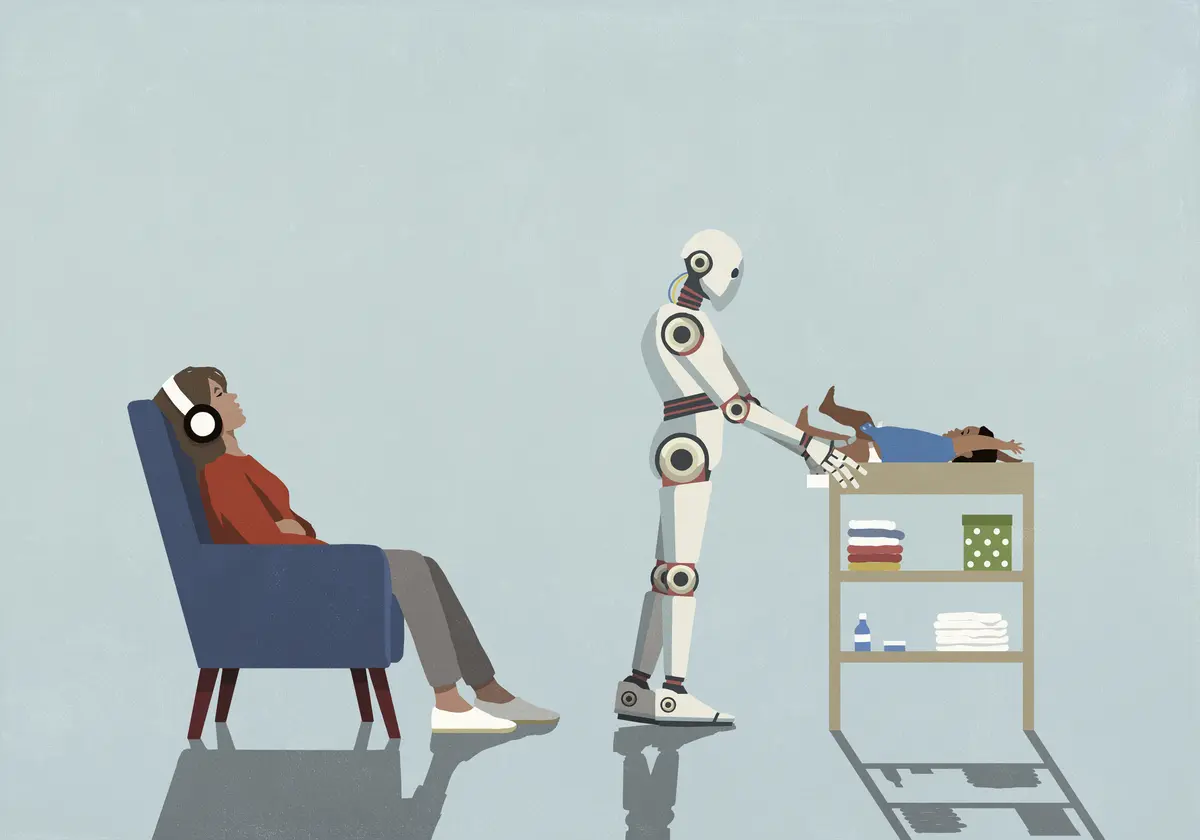 Can AI Truly Free Women from the Mental Burden of Caregiving?
 Forced Feeding Allegations Surface in US Immigration Detention
Traditional chatbots excel at describing scenarios with fluent prose, yet they stumble when asked to explain why a glass shatters after being knocked off a table. PhysioNet integrates a physics engine with deep learning, allowing it to simulate gravity, momentum, and material properties. By training on millions of virtual experiments, the system learns to infer the chain of events that leads from an initial action to its outcome. Researchers say this hybrid approach gives the AI a „mental model” of the world, rather than a mere textual description.
The core of PhysioNet consists of a differentiable simulator that mimics Newtonian mechanics. Input data—such as the shape, mass, and velocity of objects—feeds into the simulator, which computes trajectories in real time. The neural network then refines its predictions by comparing simulated results with observed outcomes from high‑speed camera footage. Lead author Dr. Andrea De Santis noted, „Our system can answer questions like ‘What happens if I drop a metal ball onto a wooden plank?’ with quantitative accuracy, not just narrative.” Early tests show the model achieving 92 % correctness on a benchmark of cause‑effect physics problems, outpacing standard language models by a wide margin.
Will This AI Replace Traditional Chatbots in Everyday Tasks?
Businesses are already exploring how PhysioNet could improve product design, safety analysis, and customer support. A logistics firm piloted the AI to predict package handling risks, reporting a 15 % reduction in damage rates. Critics caution that the technology still relies on simulated data and may struggle with chaotic real‑world variables like weather or human error. Nonetheless, the ability to reason about physical consequences could complement conversational agents, offering users both clear explanations and actionable predictions. As the model matures, hybrid assistants that both talk and „think” like engineers may become commonplace.
The emergence of cause‑effect aware AI signals a shift toward machines that not only describe reality but also anticipate it. If the technology scales, we could see smarter home assistants that warn users about potential hazards, or educational tools that demonstrate scientific principles interactively. However, the need for robust safety checks and transparent Continued collaboration between AI developers, physicists, and ethicists will determine whether this breakthrough fulfills its promise without unintended risks.
Frequently Asked Questions
How does PhysioNet differ from ChatGPT? PhysioNet combines a physics simulator with neural networks, enabling it to predict real‑world outcomes, whereas ChatGPT generates text based on patterns without genuine causal understanding.
Is the model ready for commercial use? Early pilots show promising results, but broader deployment requires further testing across diverse environments to ensure reliability and safety.
Can the system handle non‑physical Currently, PhysioNet focuses on tangible physical interactions; extending it to abstract domains would need additional specialized simulators and data.