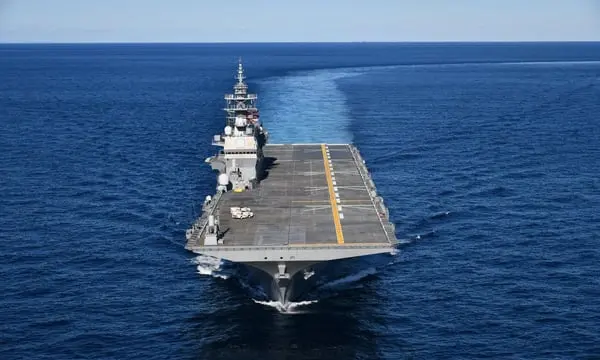
Rising Threats Across the Pacific
Tokyo released its 2026 defense white paper on August 4, highlighting Beijing’s expanding ability to project military power across the Pacific. The document warns that Chinese forces can now operate beyond the First Island Chain, challenging Japan’s security posture and regional stability.
Breaking news
 OpenAI Settles Discrimination Claim for $3.2 Million
 Pharma Executive Eyed for NIAID Director Role
 Annie Jacobsen and Geoff Bennett Discuss Biological Threats
 Arts Program Targets Loneliness in North Carolina
The paper cites increased Chinese naval deployments, longer‑range missiles, and more frequent air patrols near Japanese waters. Analysts say the shift reflects China’s ambition to dominate sea lanes and deter U. S. allies. Japan plans to boost its own deterrence, invest in advanced platforms, and deepen cooperation with partners. The report stresses that a proactive stance is essential to preserve freedom of navigation and protect national interests.
Japan’s assessment notes a surge in Chinese warship activity east of the Ryukyu Islands. Satellite imagery shows carrier‑group exercises extending into the East China Sea, a region previously considered a buffer. The white paper estimates that China now possesses over 350 operational combat aircraft capable of long‑range strikes, a 15 % increase from the previous year. Defense Minister Minoru Kihara warned that „the speed of China’s force projection is eroding the strategic space that Japan has relied on for decades.” Tokyo intends to field additional Aegis‑equipped destroyers and develop hypersonic interception capabilities to counter the threat.
Can Japan Counter Beijing’s Expanding Power?
Japanese officials argue that a mix of technology upgrades and stronger alliances will offset China’s gains. The paper outlines a plan to acquire next‑generation submarines and increase joint training with the United States and Australia. Experts suggest that a credible deterrent will require not only hardware but also clear political resolve. „Without a unified regional response, Japan risks being outpaced,” said a senior defense analyst at the National Institute for Defense Studies. The government also proposes expanding its missile‑defense network to cover the southern islands, aiming to protect critical infrastructure and civilian populations.
The white paper concludes that China’s expanding reach poses a long‑term challenge to regional peace. Japan’s strategy focuses on enhancing self‑defense, reinforcing alliances, and maintaining a rules‑based order. Observers expect heightened diplomatic activity and possible new security arrangements in the coming years.
Frequently Asked Questions
What is the First Island Chain? It is a line of islands stretching from Japan through Taiwan to the Philippines, traditionally viewed as a defensive barrier against mainland Chinese expansion.
How is Japan planning to upgrade its naval forces? Tokyo will procure additional Aegis destroyers, develop stealth submarines, and invest in hypersonic missile interception systems to improve maritime deterrence.
Will the white paper affect Japan’s relations with the United States? The document underscores deeper security cooperation, signaling that Japan will seek stronger U. S. support to counterbalance China’s growing influence.
