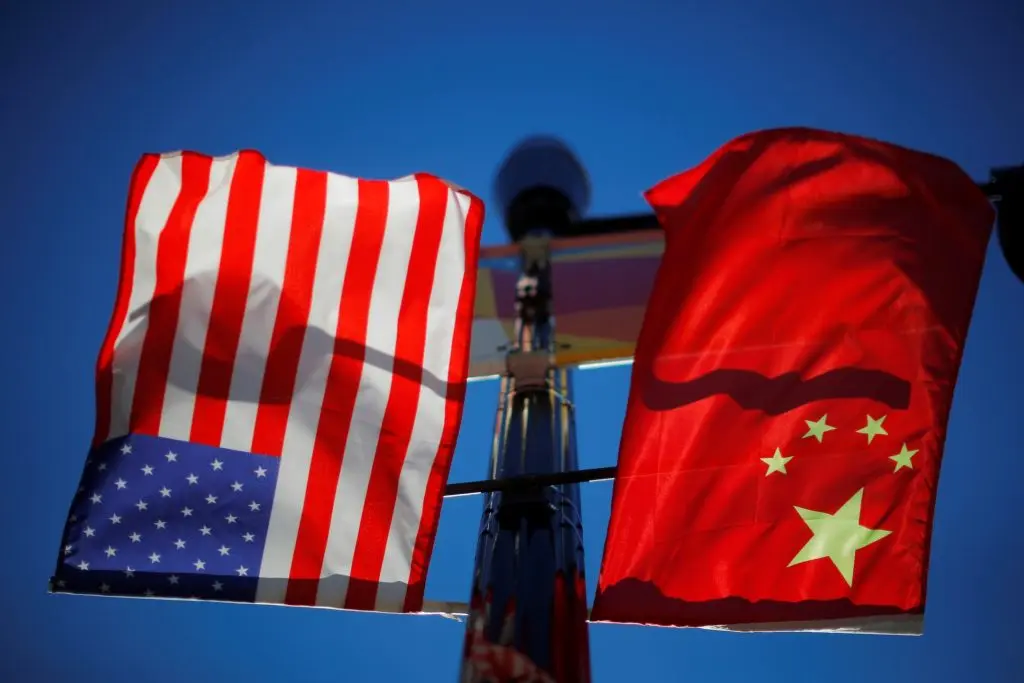
Trade and Technology Clash at Center of Talks
President Donald Trump welcomed Chinese President Xi Jinping to the White House on Monday for high-stakes talks covering trade disputes, artificial intelligence policy, and flashpoints involving Iran and Taiwan. The meeting marked Xi’s first visit to Washington since taking office, arriving amid mounting economic and geopolitical friction between the two powers.
Breaking news
 Trump Rejects AI Safety Measures Amid China Competition
 Behavioral Health and the Justice System: Accreditation and Continuity-of-Care Standards for Justice-Involved Individuals
 Britney Spears Dazzles in Bold Lingerie Shoot
 South Korea Weighs Strong Response After DMZ Landmine Blast
The leaders met privately in the Oval Office before a broader delegation session, where both sides outlined competing visions for global technology leadership and regional stability. Trump has repeatedly criticized China’s trade practices and restrictions on U. S. companies, while Xi has pushed back against American pressure on Taiwan and sanctions related to Iran.
U. S. officials entered the summit demanding greater market access for American firms and an end to what they call unfair industrial subsidies. China, meanwhile, signaled willingness to purchase additional American goods but resisted calls to ease state support for emerging sectors like semiconductors and artificial intelligence.
„We’re looking for a fair deal,” Trump said outside the White House. „China has taken advantage of us for too long.”
Can Taiwan and Iran Tensions Be Managed?
Xi responded that cooperation must be based on mutual respect. „We oppose any country attempting to contain another’s development under the guise of competition,” he said through an interpreter.
Both sides acknowledged simmering tensions over Taiwan, where U. S. law requires continued defensive support despite China’s insistence on sovereignty. Trump reaffirmed his administration’s commitment to the island, while Xi warned against any formal recognition that could destabilize the region.
On Iran, discussions centered on Tehran’s expanding influence and its reported arms purchases from China. The U. S. has imposed sweeping sanctions on Iran, and Trump urged Xi to reconsider economic ties that may violate international norms.
Outlook Remains Uncertain Amid Broader Rivalry
„We want peace in the Middle East,” Trump said. „That means no more backdoor deals.”
Xi did not directly address Iran but emphasized that China seeks stability through dialogue rather than sanctions.
No major breakthroughs were announced by the close of the summit, though both sides agreed to continue working-level talks on trade and technology. Analysts say the meeting reflected a familiar pattern—rhetorical firmness from both sides with little movement on core disputes.
Frequently Asked Questions
The lack of a joint statement suggested deep divisions remain unresolved, particularly on issues where national security and economic interests overlap. With midterm elections approaching next year, Trump faces domestic pressure to deliver on trade promises, while Xi must balance cooperation with preserving China’s strategic autonomy.
What issues dominated the Trump-Xi summit? Trade imbalances, artificial intelligence policy, Taiwan sovereignty, and Iran’s regional role were the main topics discussed during the White House meeting.
Did the two leaders reach any agreements? No formal agreements were signed, though both sides committed to ongoing diplomatic engagement on trade and security matters.
How does this affect U. S.-China relations moving forward? Tensions are expected to persist, especially on technology and regional security issues, unless concrete compromises emerge in follow-up negotiations.