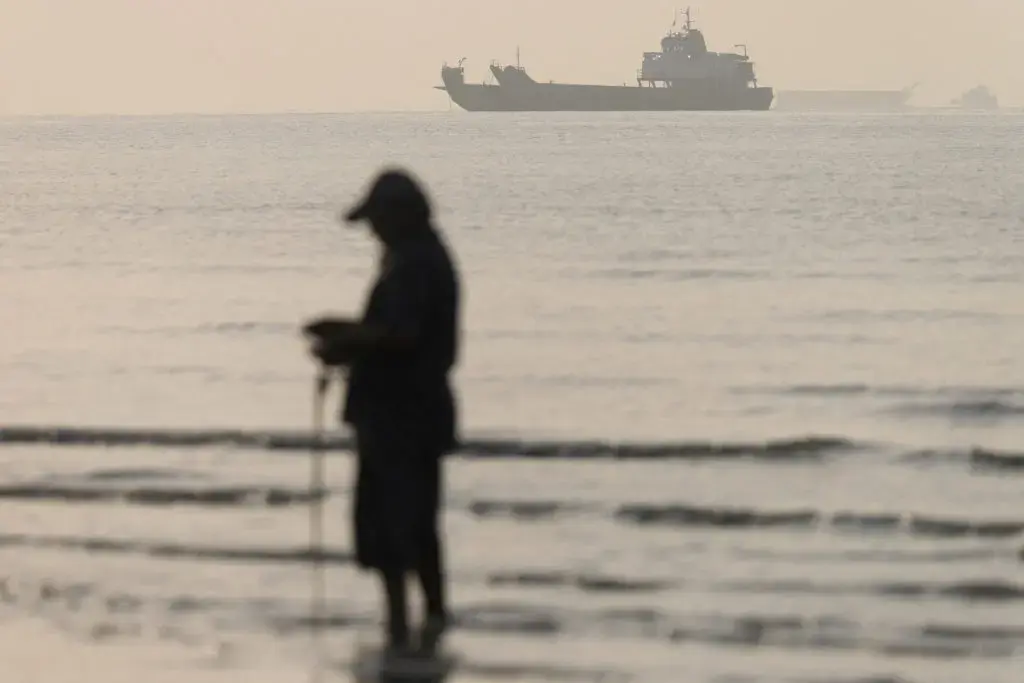
Choking Global Oil Supplies
The Strait of Hormuz has been mostly closed to commercial traffic since US-Iran talks stalled. This vital waterway is a crucial oil shipping route. Iran's actions have raised global energy concerns. The situation has been ongoing since early 2026.
Breaking news
 Greenpeace Investigates Zaporizhzhia Nuclear Plant Power Lines
 Researcher warns strict age limits needed for children on social media
 Hezbollah defends its arsenal amid Lebanese political deadlock
 Can an AI Chatbot Reduce Maternal Deaths in Kenya?
The Strait of Hormuz is a narrow passage connecting the Persian Gulf to the Gulf of Oman. It is a critical route for international oil trade, with a significant portion of the world's oil supply passing through it. The closure has led to a sharp decline in oil supplies, causing prices to surge.
Can the Global Economy Withstand the Shock?
The reduction in oil supplies has severe implications for the global economy. Many countries rely heavily on oil imports, and a sustained shortage could lead to widespread disruptions. Economists warn that the impact will be felt across various industries, from transportation to manufacturing.
The US and its allies have been trying to negotiate with Iran to reopen the strait. However, talks have made little progress, and the situation remains tense. Iran's stance has been firm, and it has shown no signs of backing down.
As the oil shortage continues, countries are scrambling to find alternative energy sources. Some are turning to renewable energy, while others are exploring new oil reserves. However, these efforts may take time to bear fruit, and the short-term outlook remains grim.
Frequently Asked Questions
The prolonged closure of the Strait of Hormuz will likely have far-reaching consequences for the global economy. As oil supplies continue to dwindle, prices are expected to remain high, leading to increased costs for consumers and businesses.
What is the significance of the Strait of Hormuz? The Strait of Hormuz is a vital waterway for international oil trade, with a substantial portion of the world's oil supply passing through it. How have countries responded to the oil shortage? Countries are exploring alternative energy sources and new oil reserves to mitigate the impact of the shortage. What are the potential consequences of the prolonged closure? The global economy may face widespread disruptions, with increased costs for consumers and businesses due to high oil prices.