Limitations of Corporate Diplomacy
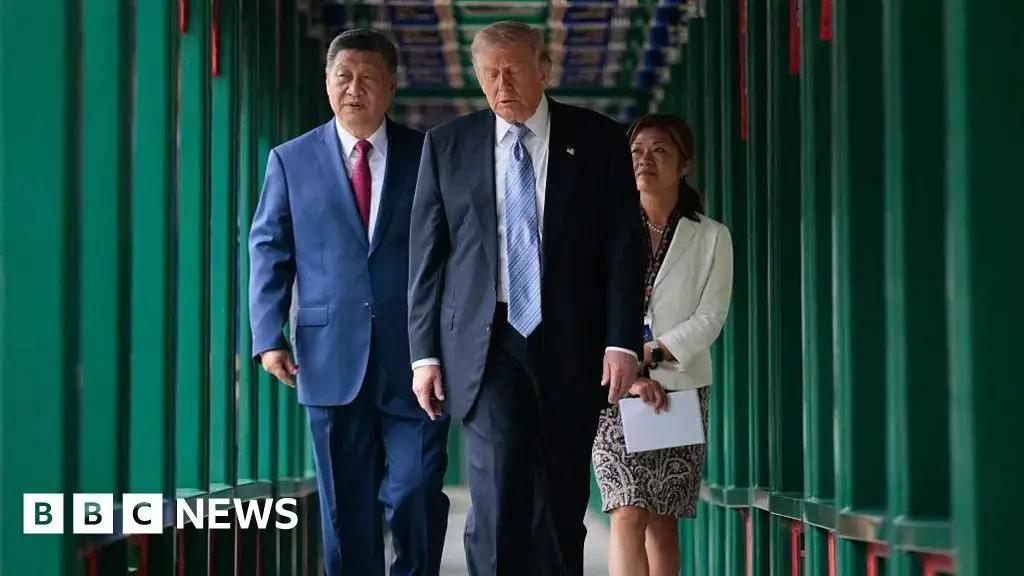
President Donald Trump concluded his high-profile visit to Beijing this week alongside a delegation of prominent American corporate executives. Despite the elaborate diplomatic ceremonies staged between the U. S. and Chinese leadership, the meetings failed to produce any significant breakthroughs or major trade agreements to address long-standing economic tensions between the nations.
Breaking news
 Greenpeace Investigates Zaporizhzhia Nuclear Plant Power Lines
 Researcher warns strict age limits needed for children on social media
 Hezbollah defends its arsenal amid Lebanese political deadlock
 Can an AI Chatbot Reduce Maternal Deaths in Kenya?
The visit was intended to showcase a new era of cooperation between the world’s two largest economies. Trump met with President Xi Jinping to discuss market access and trade imbalances. However, the anticipated signing of substantial commercial contracts did not materialize, leaving industry observers questioning the effectiveness of the high-level corporate diplomacy.
The delegation included leaders from major U. S. corporations hoping to secure better terms for their operations within China. While the atmosphere remained cordial, the lack of concrete policy shifts suggests that deep-seated structural disagreements remain unresolved. The focus shifted from substantive economic reform to symbolic gestures that ultimately provided little relief for American businesses.
Will Trade Relations Stabilize After the Visit?
Analysts noted that the absence of a major trade package highlights the difficulty of aligning the interests of private enterprises with the complex geopolitical agenda of the two governments. The choreographed events served as a backdrop for discussions, yet they masked the underlying friction regarding intellectual property rights and market barriers.
The failure to announce sweeping deals signals a cooling trend in bilateral economic negotiations. Both administrations appear to be prioritizing their domestic agendas over the immediate demands of the international business community. Without a clear framework for future cooperation, companies face continued uncertainty regarding their long-term investments in the region.
Frequently Asked Questions
The outlook remains cautious as global markets assess the lack of progress. Washington and Beijing must now determine if these meetings were merely a diplomatic exercise or a precursor to more aggressive trade policies. For now, the business sector remains in a holding pattern while waiting for tangible policy changes.
What was the primary goal of the executive delegation in Beijing? The group aimed to secure expanded market access and resolve trade disputes through direct engagement with Chinese leadership. They hoped to leverage the presidential visit to finalize significant commercial agreements.
Did the meetings result in any major policy changes? No, the summit concluded without any significant breakthroughs or substantial new trade deals. The discussions remained largely symbolic, failing to address the structural economic issues currently affecting international trade.