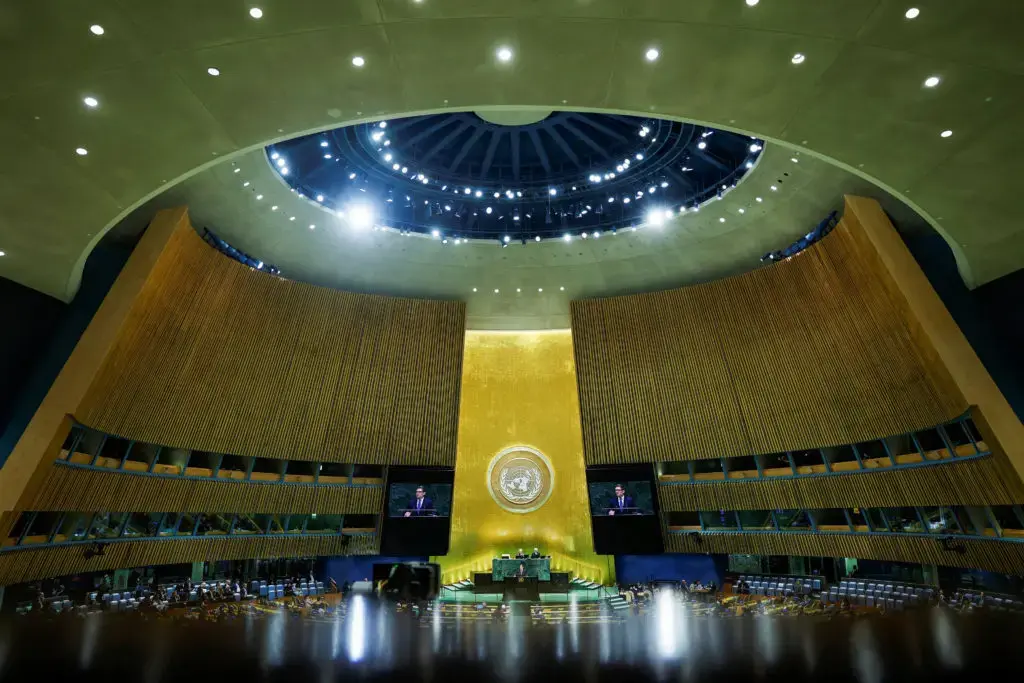
Bilateral Talks Amidst Multilateral Diplomacy
President Donald Trump announced that American and Iranian officials held a meeting on Tuesday. This encounter occurred during the second day of the 2026 United Nations General Assembly. The revelation adds a significant diplomatic layer to the ongoing international gathering. Leaders from various nations are currently convening in New York for this annual summit. The timing of the talks suggests a strategic effort to address bilateral tensions amidst broader global discussions.
Breaking news
 Trump Rejects AI Safety Measures Amid China Competition
 Behavioral Health and the Justice System: Accreditation and Continuity-of-Care Standards for Justice-Involved Individuals
 Britney Spears Dazzles in Bold Lingerie Shoot
 South Korea Weighs Strong Response After DMZ Landmine Blast
The White House confirmed the interaction took place behind closed doors. Both delegations reportedly discussed key points of contention. Observers noted the unusual nature of direct engagement between the two sides. Such meetings are often rare due to historical diplomatic friction. The presence of both parties at the assembly creates a conducive environment for informal negotiations. This development marks a notable shift in their recent diplomatic posture.
The meeting highlights the complex interplay between bilateral and multilateral diplomacy. While the General Assembly focuses on collective global issues, individual nations continue to pursue specific agendas. The US and Iran have long-standing disputes regarding regional influence and economic sanctions. These topics likely formed the core of their Tuesday discussion. Analysts suggest that face-to-face contact can reduce misunderstandings. It allows for nuanced communication that written statements often lack. The backdrop of the UN provides a neutral ground for such interactions.
Will Direct Engagement Lead to Lasting Progress?
Delegates from other countries watched the developments closely. Many hope that progress between Washington and Tehran could stabilize the region. A successful dialogue might pave the way for broader agreements. However, skeptics remain cautious about immediate outcomes. They point to past instances where talks stalled without concrete results. The atmosphere in New York remains charged with anticipation. Journalists and diplomats alike await further official statements.
The success of these talks depends on several critical factors. Trust between the two governments remains fragile. Previous agreements have faced implementation challenges. For lasting progress, both sides must demonstrate commitment to follow-through. The international community plays a vital role in monitoring compliance. Pressure from allies and partners will influence future steps. If the meeting yields tangible results, it could reshape regional dynamics. Conversely, failure might reignite existing tensions quickly.
The outcome of this engagement will be closely scrutinized in the coming days. Diplomatic sources indicate that follow-up meetings are being considered. The tone of the initial conversation sets the stage for future interactions. Positive signals could encourage other nations to engage similarly. Negative outcomes might lead to renewed isolation. The world watches to see if this brief encounter sparks a longer-term process.
Frequently Asked Questions
Did the US and Iran sign an agreement on Tuesday? No, officials confirmed that talks took place but did not announce a formal signed treaty. The meeting focused on discussing key issues rather than finalizing a new deal immediately.
Who attended the meeting between the two delegations? Specific names were not fully disclosed in initial reports, but senior officials from both governments participated. The exact composition of the teams remains under review by both sides.
How does this affect the rest of the General Assembly? The meeting adds a diplomatic dimension to the broader UN session. It may influence discussions on regional security and economic cooperation among member states.