A Nuclear Middleman Emerges
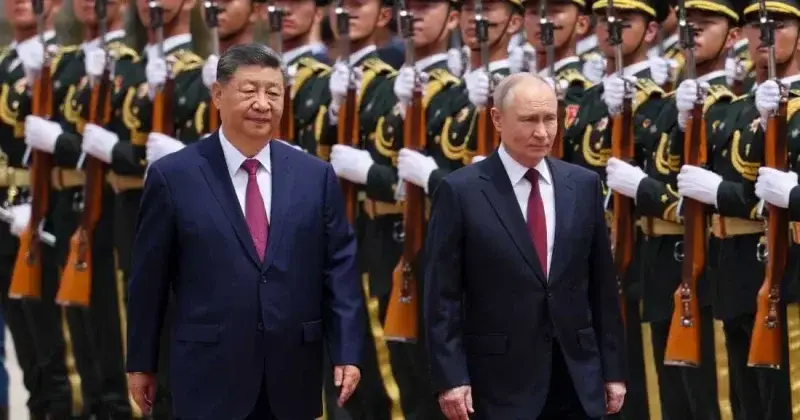
Russian President Vladimir Putin met with Chinese President Xi Jinping in Beijing, proposing a plan to store Iran's enriched uranium stockpiles in Russia. The Kremlin is seeking to revive a diplomatic strategy from the Obama era, positioning itself as a nuclear mediator between Iran and the West.
Breaking news
 Deadly Glacier and Rock Collapse in Nepal Linked to Climate Warming
 US Congress Passes Sweeping Sanctions Against Russia
 Speaker Johnson Ends House Session Early to Halt Impeachment Effort
 The High-Stakes Fight for Senate Majority Control
The proposal is part of a broader effort by Russia to play a key role in nuclear diplomacy. Putin's plan could potentially shift the geopolitical dynamics surrounding Iran's nuclear program. By storing Iran's enriched uranium in Russia, the country could be seen as taking a step towards reducing tensions with the West.
Russia's proposal is an attempt to reassert its influence in the region and revive a diplomatic playbook that was previously successful. During the Obama era, Russia played a crucial role in negotiating the Joint Comprehensive Plan of Action (JCPOA) with Iran. Putin's plan could be seen as a bid to regain this influence.
Can Russia Broker a Deal?
The proposal was made during Putin's recent visit to Beijing, where he met with Xi Jinping. The two leaders discussed various issues, including the situation in the Middle East and the Iranian nuclear program.
The success of Putin's plan depends on various factors, including Iran's willingness to cooperate and the response of the West. If implemented, the proposal could potentially ease tensions between Iran and the West, but it also raises concerns about Russia's growing influence in the region.
The consequences of Putin's proposal are far-reaching, with potential implications for the global nuclear non-proliferation regime. If successful, the plan could pave the way for further diplomatic efforts between Russia, China, and Iran, potentially reshaping the regional dynamics.
Frequently Asked Questions
What is Russia's motivation behind the proposal? Russia is seeking to revive its influence in the region and position itself as a nuclear mediator between Iran and the West.
How likely is it that Iran will accept the proposal? Iran's response to the proposal is uncertain, and its willingness to cooperate will depend on various factors, including the terms of the agreement.
What are the potential implications of the proposal for the global nuclear non-proliferation regime? The proposal could potentially ease tensions between Iran and the West, but it also raises concerns about Russia's growing influence in the region and the potential for nuclear proliferation.