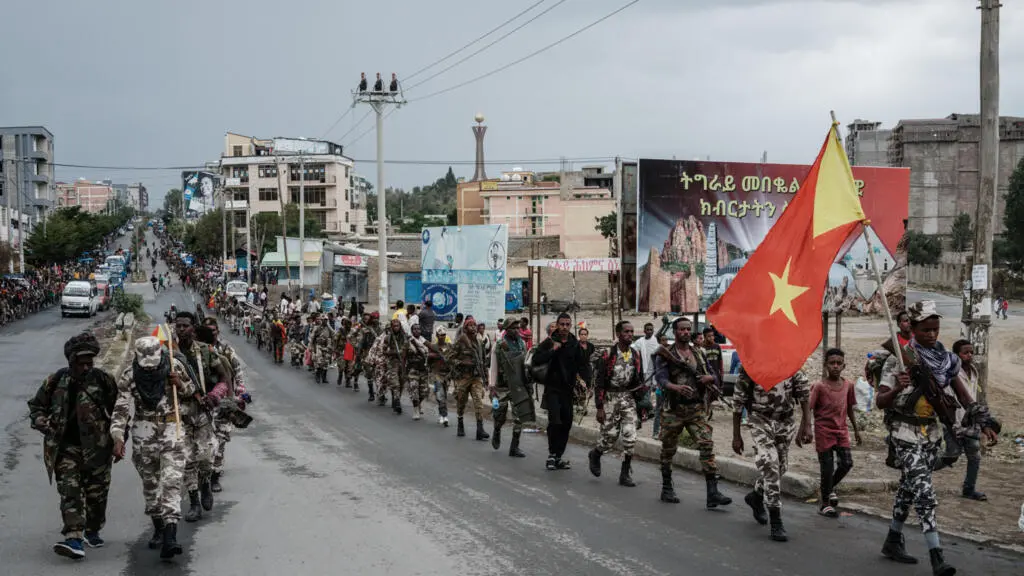
Allegations of External Interference
Ethiopia’s top military official leveled serious allegations on Sunday, claiming that both Eritrea and Sudan are providing support to armed factions currently battling federal forces. This escalation occurs as violent confrontations intensify within the Tigray region, threatening to destabilize the broader Horn of Africa as federal troops struggle to contain the rebellion.
Breaking news
 Former German Intelligence Chief Faces Espionage Charges
 American Educator Analyzes French Student Demonstrations
 Massive Protests Erupt Across France Over Educational Funding Shortfalls
 French students and teachers protest inadequate school resources
The Tigray People’s Liberation Front (TPLF) maintains that its ongoing military operations are strictly defensive in nature. The group claims to have successfully captured several regional airports, signaling a significant shift in the operational landscape. These developments have deepened concerns regarding a prolonged humanitarian crisis as the conflict spreads across the territory.
The accusations from the Ethiopian army chief mark a major diplomatic shift in the region. By naming Sudan and Eritrea as active participants in the insurgency, federal authorities are framing the internal conflict as a proxy war. This rhetoric complicates existing regional alliances and raises questions about the integrity of Ethiopia's borders.
Can Regional Stability Survive This Escalation?
The TPLF leadership insists that their recent tactical gains are necessary to protect their people from federal aggression. With control over key aviation infrastructure, the rebels have effectively disrupted government supply lines. This strategic move forces federal command to rethink their approach to reclaiming territory in the northern highlands.
The international community remains deeply concerned about the potential for a wider regional conflagration. If neighboring nations are indeed providing logistical or military backing to the rebels, the risk of a spillover effect increases dramatically. Humanitarian aid organizations are already struggling to reach civilians trapped in the crossfire of this expanding battle.
Frequently Asked Questions
As the federal government vows to restore order, the path toward a ceasefire appears increasingly narrow. The involvement of external actors suggests that the fighting may not be resolved through domestic political dialogue alone. Observers fear that without immediate de-escalation, the humanitarian toll will continue to climb sharply in the coming weeks.
What is the primary cause of the current tension? The conflict stems from a power struggle between the federal government and the Tigray People’s Liberation Front. This has escalated into open warfare involving multiple regional players.
How are neighboring countries involved in the conflict? Ethiopian military officials claim that both Sudan and Eritrea are providing support to the Tigrayan rebels. These allegations suggest that the internal conflict has expanded into a complex regional dispute.